Villa Traiano
Benevento is one of those rare Italian cities that manages to be both profoundly historic and wonderfully under the radar. While tourists crowd the Amalfi Coast and queue outside Pompeii, this ancient Samnite capital sits quietly in the hills of inland Campania, guarding some of the finest Roman monuments in Europe. If you are looking for an authentic southern Italian experience — without the crowds, the inflated prices, or the sense of visiting a theme park — Benevento deserves a prominent place on your itinerary.
The Arch of Trajan: Rome’s Greatest Surviving Triumphal Arch
No visit to Benevento begins anywhere other than the Arch of Trajan, and for good reason. Erected in 114 AD to celebrate the opening of the Via Traiana — the new road connecting Rome to the Adriatic port of Brindisi — this is widely considered the best-preserved Roman triumphal arch in existence. That claim is not hyperbole. While the Arch of Titus in Rome has been heavily restored and the Arch of Constantine is a patchwork of recycled reliefs, Benevento’s arch stands in remarkably original condition, its sculptural programme almost entirely intact.
The arch rises to a height of over 15 metres, clad in Parian marble and adorned with relief panels that read like a political manifesto carved in stone. The side facing Rome depicts scenes of war, triumph, and imperial authority. The side facing the provinces — the direction travellers would see as they departed toward Brindisi — shows Trajan in peacetime: distributing food to the poor, founding colonies, welcoming foreign ambassadors. It is propaganda of the highest artistic order, and standing beneath it you can still feel the ambition of an empire at its zenith.
The arch sits at what was once the entrance to the city along the Via Appia, and the surrounding streets retain much of their ancient layout. Take your time here. Walk around the full perimeter. Notice how the morning light catches the reliefs differently from the afternoon sun.
The Roman Theatre: Ancient Stage, Living Performances
A short walk from the arch brings you to the Roman Theatre, a second-century structure commissioned under Emperor Hadrian and later expanded under Caracalla. With a seating capacity that once exceeded 15,000, this was among the larger theatres in the Roman world, a testament to Benevento’s importance as a crossroads city.
What makes Benevento’s theatre special today is not just its archaeological significance but its continued use as a performance venue. During the summer months, the ancient cavea comes alive with concerts, opera, and theatrical productions. Watching a performance here as the sky darkens over the stone tiers is an experience that collapses two millennia into a single evening. The acoustics remain superb — Roman engineers knew what they were doing.
Even outside performance season, the theatre is worth a long visit. The surviving sections of the scaenae frons (the ornamental backdrop wall) hint at the grandeur of the original structure, and the small museum on site houses masks, inscriptions, and fragments that help you imagine the building in its prime.
The Church of Santa Sofia: UNESCO World Heritage
If the Arch of Trajan represents Benevento’s Roman chapter, the Church of Santa Sofia opens the Lombard one. Built around 760 AD by the Lombard Duke Arechis II, this small but extraordinary church was inscribed on the UNESCO World Heritage List in 2011 as part of the serial nomination “Longobards in Italy: Places of the Power.”
The church is an architectural puzzle. Its plan is a six-pointed star inscribed within a circle, creating a central space supported by columns recycled from Roman buildings — a common practice in early medieval Italy. The result is a structure that feels simultaneously ancient and innovative, a bridge between the classical world and the medieval one. Fragments of original frescoes survive in the apse, offering tantalising glimpses of Lombard artistic ambition.
Adjacent to the church, the Cloister of Santa Sofia is one of the most beautiful Romanesque cloisters in southern Italy. Its paired columns, carved capitals, and serene garden create a pocket of calm that invites lingering. The cloister also houses the Museo del Sannio, which we will return to shortly.
Rocca dei Rettori: The Papal Fortress
Dominating the highest point of the old city, the Rocca dei Rettori is a fourteenth-century fortress built by the papal governors who administered Benevento during its long period as a papal enclave — a political anomaly that lasted from the eleventh century until Italian unification in 1860. The fortress incorporates earlier Lombard structures and sits atop the foundations of a Roman sanctuary.
Today the Rocca houses the Museo del Sannio’s historical section and the provincial administration. The real draw, however, is the view from its grounds. The public garden surrounding the fortress offers a panorama that sweeps across the Sabato and Calore river valleys to the mountains beyond. On a clear day, you can see the massif of the Taburno range, whose profile is said to resemble a sleeping woman — a figure known locally as La Dormiente del Sannio, the Sleeping Woman of Sannio.
Hortus Conclusus: Contemporary Art in Medieval Walls
Tucked behind the former Convent of San Domenico, the Hortus Conclusus is one of the most striking contemporary art installations in southern Italy. Created by Benevento-born artist Mimmo Paladino — one of the leading figures of the Italian Transavanguardia movement — this enclosed garden is populated with bronze sculptures, a large horse, a golden disc, and various symbolic figures that dialogue with the medieval architecture surrounding them.
The Hortus Conclusus is not a museum in any conventional sense. There are no labels, no guided routes, no gift shop. You simply enter the space and let Paladino’s work speak for itself against the backdrop of ancient stone walls and open sky. It is contemplative, slightly mysterious, and entirely free to visit.
Museo del Sannio: Three Thousand Years in One Collection
Housed in the Cloister of Santa Sofia, the Museo del Sannio is the principal museum of the province and one of the oldest in southern Italy, founded in 1873. Its collections span from prehistoric Samnite artefacts through Roman sculpture, medieval manuscripts, and Renaissance painting.
Highlights include an outstanding collection of Egyptian artefacts (unexpected in a provincial museum and linked to the cult of Isis that once thrived in Benevento), Roman statuary found during excavations in the city, and a gallery of paintings from the seventeenth and eighteenth centuries. The museum is not overwhelming in scale, which makes it an ideal visit — you can see the important pieces without museum fatigue setting in.
Walking the Historic Centre
Beyond its headline monuments, Benevento rewards aimless exploration. The historic centre is compact and largely pedestrianised, its streets lined with churches, palazzi, and small piazzas that reveal themselves around unexpected corners. Corso Garibaldi, the main street, connects the Arch of Trajan to the cathedral area and is lined with shops, cafes, and the kind of everyday Italian life that tourist hotspots have largely lost.
The Cathedral of Benevento, heavily damaged during World War II and subsequently rebuilt, retains its striking Romanesque bronze doors — 72 panels depicting biblical scenes that rank among the finest examples of medieval metalwork in Italy. The Ponte Leproso, an ancient Roman bridge over the River Sabato, is another atmospheric spot, steeped in legend (its name, “Leper’s Bridge,” has spawned centuries of folklore about witches and nocturnal gatherings).
Gastronomy: Torrone, Strega, and Honest Country Cooking
Benevento’s food culture is rooted in the generous, straightforward cooking of the Campanian interior — a cuisine built on seasonal vegetables, hand-made pasta, cured meats, and the excellent local olive oil.
The city’s most famous culinary export is torrone, the nougat confection made from honey, almonds, and egg whites that has been produced here for centuries. Several shops in the city centre sell artisanal torrone, and the annual Torrone Festival draws visitors from across the region.
Then there is Strega. The bright yellow liqueur, produced in Benevento since 1860 by the Alberti family, is flavoured with some seventy herbs and spices and owes its name — “witch” in Italian — to the ancient legends of witchcraft associated with the city. The Strega factory on the main corso offers guided tours and tastings, and the liqueur appears in local desserts, most notably the Torta Strega. The Strega Literary Prize, one of Italy’s most prestigious, has been awarded in Benevento since 1947, further cementing the brand’s cultural significance.
For dining, seek out restaurants serving dishes like cavatelli with ragout, cardone (a thistle-based dish traditional at Christmas), lamb from the surrounding hills, and the superb local cheeses. The wines of Sannio — Aglianico del Taburno and Falanghina above all — are the natural accompaniment and deserve an article of their own.
The Wines of Sannio
The hills surrounding Benevento constitute one of Campania’s most important wine territories. Aglianico del Taburno, a powerful red sometimes called the “Barolo of the South,” is a DOCG wine of real complexity and aging potential. Falanghina del Sannio, a crisp and aromatic white with ancient Greek origins, has become one of the most popular southern Italian whites on the international market. Several wineries in the area welcome visitors for tastings and cellar tours, making a wine excursion an ideal complement to a day of sightseeing in the city.
Villa Traiano: Your Base for Exploring Benevento
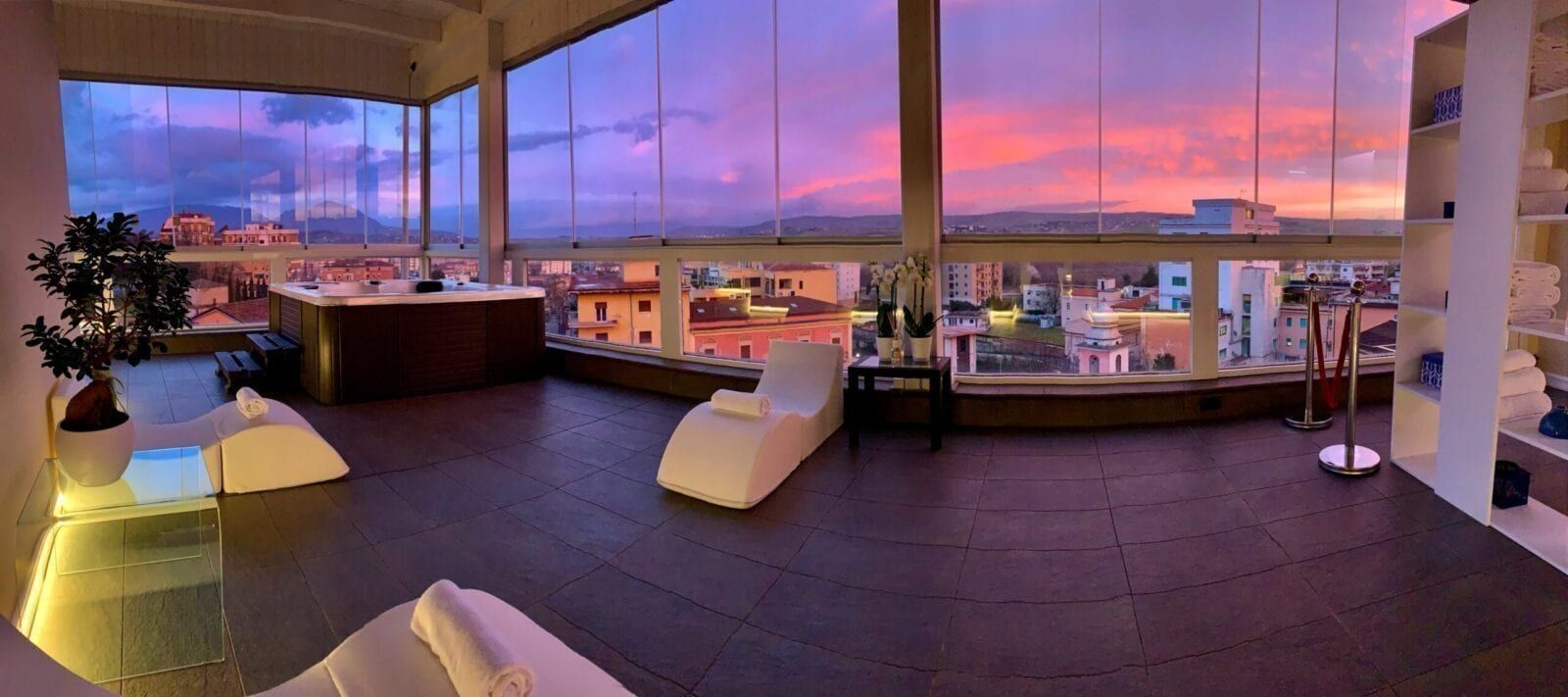
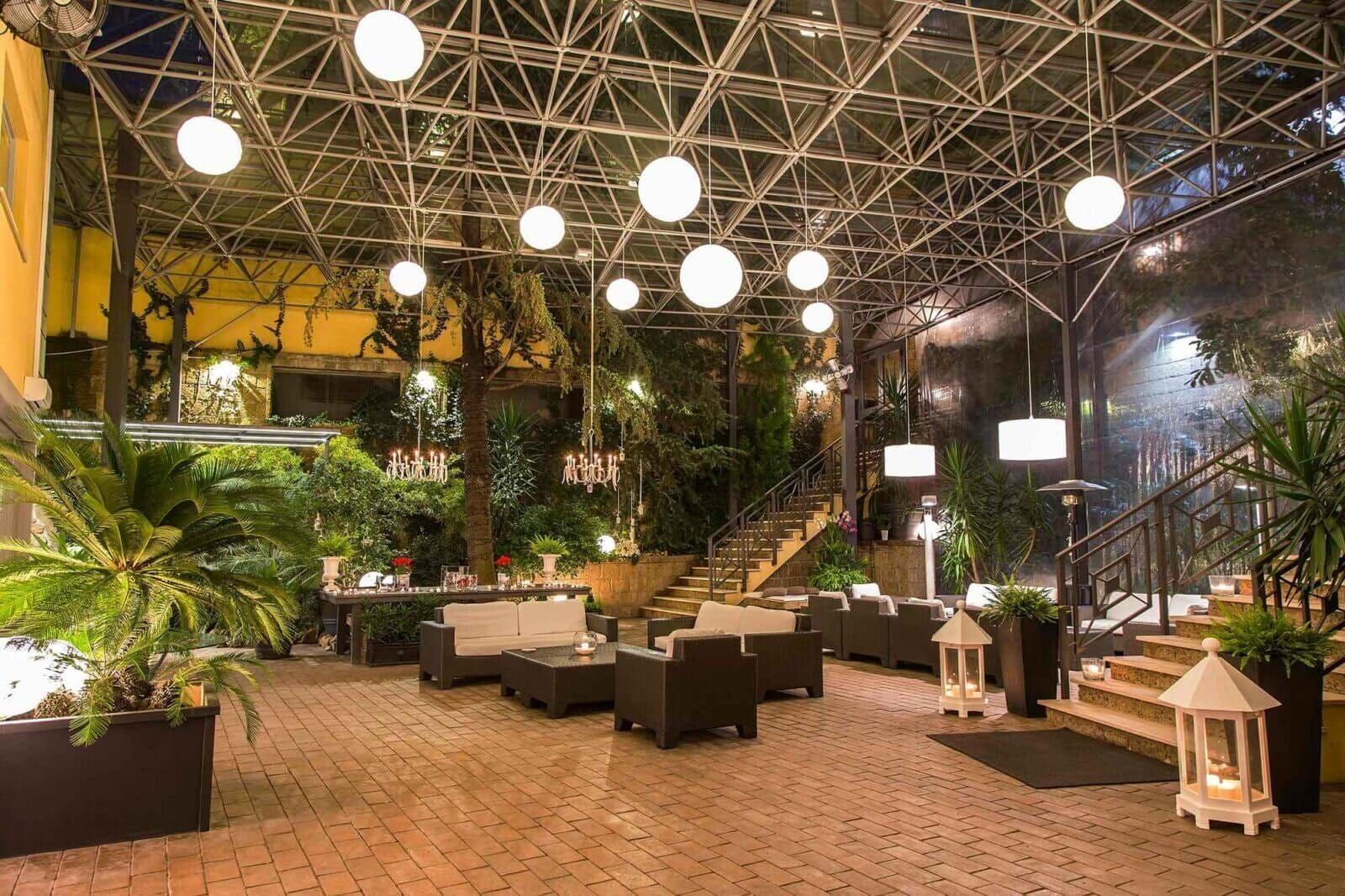
If you are planning a visit to Benevento and the Sannio region, Villa Traiano offers the ideal base. Located just minutes from the city centre, the hotel combines the comfort of a modern four-star property with the warmth and character of a family-run establishment. With its restaurant, spa, and event spaces, Villa Traiano is more than a place to sleep — it is a destination in its own right, and the perfect starting point for discovering everything this remarkable and still wonderfully unspoiled corner of Campania has to offer.
Whether you come for the Arch of Trajan or the torrone, the Roman Theatre or the Falanghina, Benevento has a way of exceeding expectations. It is a city that asks only for your curiosity and repays it generously. Come with an open schedule, comfortable shoes, and an appetite. You will not be disappointed.